It's one of the biggest myths in the spirits industry.
The truth?
Around 97% of the world's vodka isn't made from potatoes at all.
Most vodka is distilled from wheat, rye or corn. Significant volumes are also produced from sugar beet, sugar cane and even grapes. Potato vodka is the exception—not the rule.
Look at the world's biggest-selling vodka brands and the picture becomes even clearer. Of the top 100 global vodka brands, fewer than 5% are made from potatoes. Most are made from grain, corn, sugar or grapes.
So why don't more distilleries use potatoes?
Because they're the harder choice.
Potatoes are more demanding to work with and yield less alcohol per tonne than grain. For large-scale producers, grain is the more efficient and economical option.
So why do we choose potatoes?
Simple.
Because we believe they produce a better vodka.
When distilled meticulously, potatoes create a spirit with exceptional purity, a naturally silky texture, a richer mouthfeel and genuine character. A vodka that's smooth enough to sip over ice, yet clean enough to elevate every cocktail.
Could we make vodka from grain?
Of course.
It would almost certainly be cheaper and easier.
But we're not trying to make the easiest vodka to produce.
We're trying to make the best vodka we possibly can.
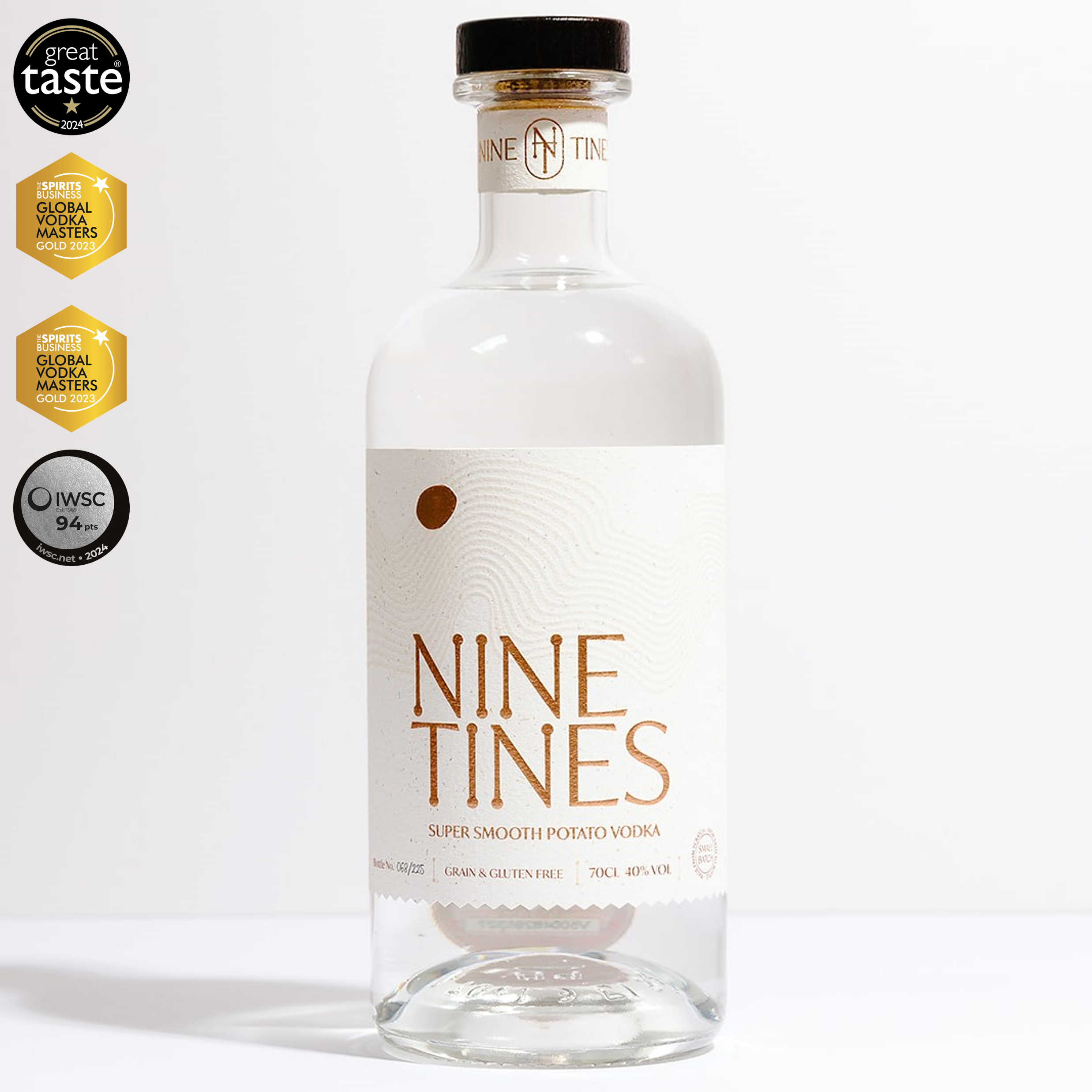
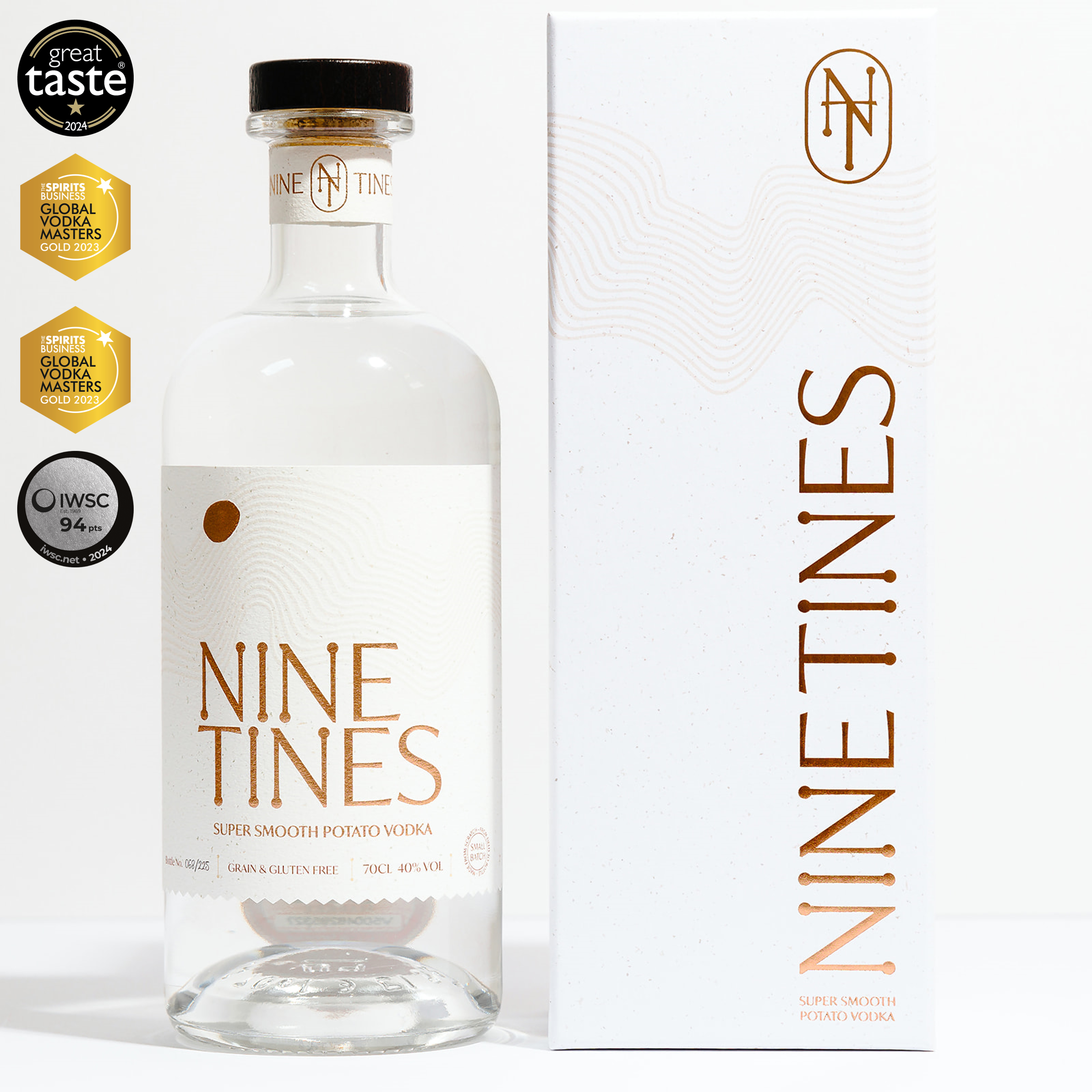
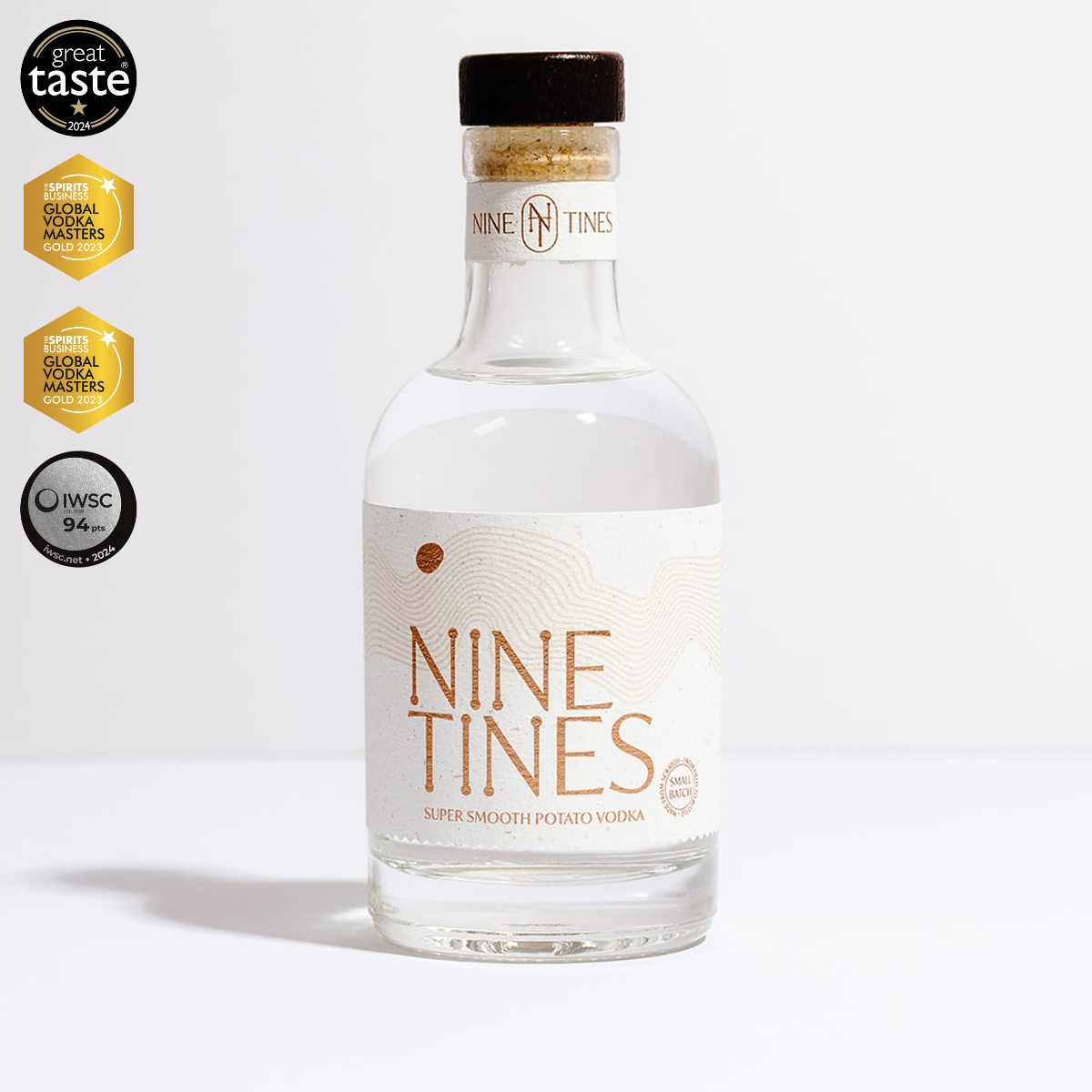
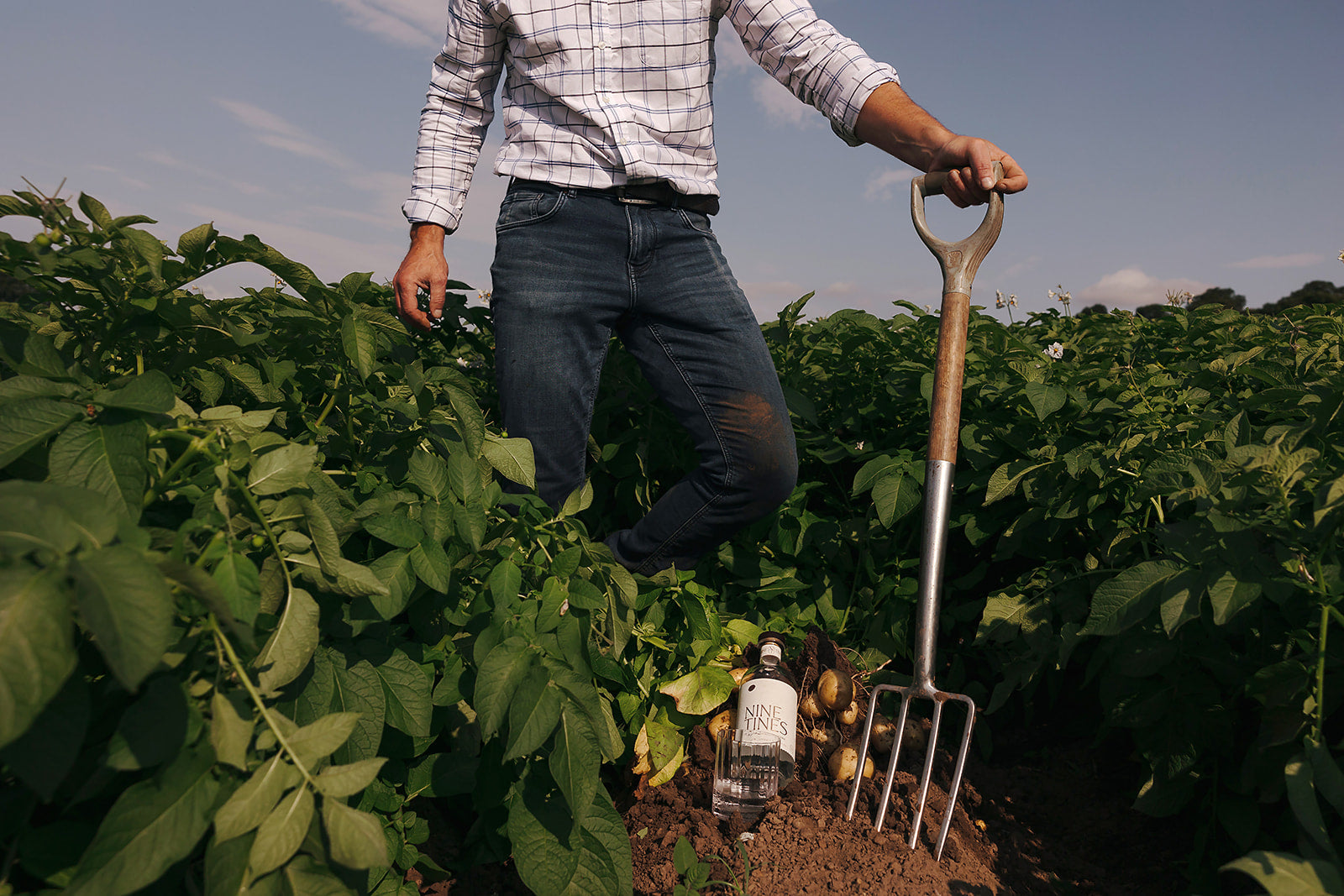
That's why every bottle of Nine Tines begins with potatoes grown on our family farm in North Yorkshire, combined with our own spring water and distilled less than nine miles from field to bottle.
So the next time someone says, "Vodka made from potatoes? Revolutionary."
You can tell them they're mistaken.